Free Printable Chore Chart: A Simple Weekly Chart for the Whole Family
When one person does all the housework, the home never stays tidy for long, and that person gets tired fast. A printable chore chart fixes this by making the jobs visible. Everyone can see who does what, on which day, and tick it off when it is done.
Below you will find a free printable chore chart you can save and print, plus simple ideas for which chores fit each age, how to set the chart up, and how to keep the whole family using it.
Download the Free Printable Chore Chart
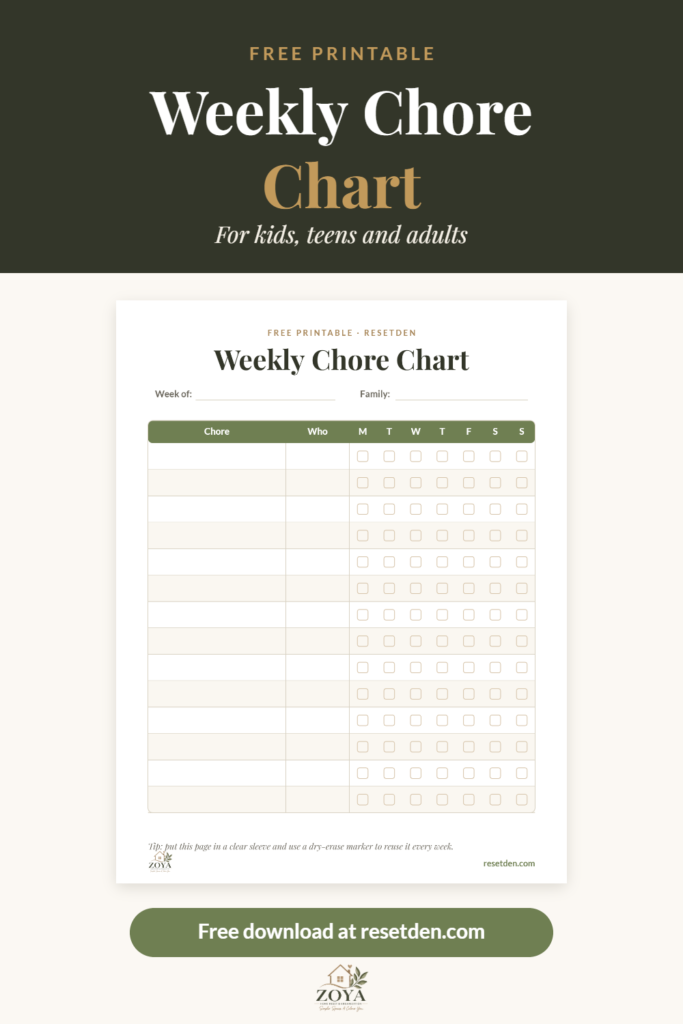
Our weekly chore chart has a row for each chore, a column for each day of the week, and a space to write the name of the person responsible. It works for kids, teens and adults.
Download the Free Chore Chart (PNG)
Print it on regular paper, or slide it into a plastic sleeve and use a dry-erase marker so you can reuse it every week.
Why a Chore Chart Works
A printable chore chart turns “someone should do this” into “this is my job today”. It helps because:
- Everyone knows what is expected. No more reminding, repeating or arguing.
- The work is shared fairly. You can see at a glance if one person has too much.
- Ticking boxes feels good. Small wins keep children and adults motivated.
- Nothing gets forgotten. Weekly jobs like changing towels or watering plants get their own day.
How to Set Up Your Printable Chore Chart
- List the jobs. Walk through each room and write down the daily and weekly chores. Keep each task small and clear: “empty the dishwasher”, not “do the kitchen”.
- Choose the days. Daily tasks go in every column; weekly tasks go on one day only.
- Assign a name to each chore. Match jobs to age and ability (see the list below), and rotate the less popular ones every week.
- Hang it where everyone sees it. The fridge, the inside of a cupboard door or a family command center work well.
- Review it on Sunday. Check what got done, give credit, and fill in next week’s chart during your Sunday reset routine.
Chores by Age
Every family is different, so treat these as a starting point, not a rule. Always supervise young children, and keep cleaning products out of their reach.
Ages 3 to 5
- Put toys back in their bin
- Put dirty clothes in the laundry basket
- Help set the table with unbreakable items
- Wipe up small spills with a cloth
Ages 6 to 9
- Make their bed
- Feed pets
- Sort laundry by color and match socks
- Clear their own plate and cup after meals
- Dust low surfaces
Ages 10 to 13
- Empty the dishwasher
- Vacuum one room
- Take out the trash and the recycling
- Fold and put away their own laundry
- Wipe the bathroom sink
Teens and Adults
- Cook a simple meal once a week
- Clean the bathroom (our bathroom cleaning checklist shows the order)
- Do a full load of laundry from start to finish
- Mop the kitchen floor
- Do the nightly kitchen reset
Tips to Keep Everyone Using It
- Start small. Two or three chores per person is better than a long list nobody finishes.
- Rotate the jobs nobody likes, such as the bins or the bathroom, so it feels fair.
- Focus on effort, not perfection. A bed made by a six-year-old will not look like a hotel bed, and that is fine.
- Add a small weekly reward if it helps your family: choosing the Friday film, a later bedtime or a family outing.
- Adults use it too. Children follow the system faster when they see everyone’s name on the chart.
Where the Chore Chart Fits in Your Week
A printable chore chart covers who does what. For what to clean on each day, pair it with our printable cleaning schedule. Keep both pages, plus your contacts and meal plans, together in a home management binder, so the whole household knows where to look.
🌿 Not sure where to start?
Get the free 60-Minute Calm Home Reset Checklist: six simple steps with times, plus a 20-minute version for busy days.
Get the free checklist →Frequently Asked Questions
What should be on a chore chart?
The daily and weekly jobs that keep your home running: tidying, dishes, laundry, bins, pet care and bathroom cleaning. Write each task in a short, clear way and add the name of the person responsible.
How many chores should a child have?
Start with two or three age-appropriate chores and add more as they get older and more confident. Small, regular tasks build the habit better than a long list.
Should kids be paid for chores?
Families handle this differently. Many keep everyday chores as part of family life and offer pocket money or rewards only for extra jobs. Choose what fits your family’s values.
How do I make a printable chore chart reusable?
Print it once and put it in a clear plastic sleeve or laminate it. Use a dry-erase marker to write names and tick boxes, then wipe it clean each week.
Print It and Start This Week
Download the chart, write two or three chores for each person and hang it on the fridge tonight. One week from now, you will notice the difference.
Want more pages for your home? Download the free Calm Home Reset Checklist, or get the printable ZOYA 7-Day Calm Home Reset Planner. Browse all our printables.