Home Management Binder: 10 Sections to Include and How to Set It Up
How many times have you searched the whole house for a warranty card, the plumber’s number or the school calendar? A home management binder puts all of that in one place. It is a simple folder that holds the papers, lists and plans that keep your home running, so you always know where to look.
This guide shows you what a home management binder is, the 10 sections worth including, and how to set one up in an afternoon with printable pages and a few basic supplies.

What Is a Home Management Binder?
A home management binder (also called a household binder) is a ring binder with tabbed sections for the information your household uses every week. Think of it as the paper “brain” of your home: cleaning routines, meal plans, important contacts, bills, and notes for whoever is looking after the house.
It works because everything has one home. When a new paper arrives, you know exactly where it goes. When you need something, you open one binder instead of three drawers.
A binder is not about being perfect. Even a simple version with four or five sections saves time every week.
What You Need
You do not need anything fancy to start:
- A sturdy ring binder, about 4 cm (1.5 inches) wide
- A set of tab dividers, ideally 10
- Clear plastic sleeves for papers you do not want to punch holes in
- A hole punch
- A pen and a pencil kept in the binder’s front pocket
- Your printable pages: schedules, checklists and lists
10 Sections to Include
Pick the sections that fit your home. Start with the first five, then add more when you are ready.
1. Calendar and Weekly Plan
A monthly calendar and a weekly planning page. Write appointments, school events and bill due dates in one place, so the whole family can see the week at a glance.
2. Cleaning Routines
Your daily, weekly and monthly cleaning lists. Our printable cleaning schedule gives you five daily habits and one focus task for each day of the week, and fits perfectly in this section.
3. Home Reset Checklists
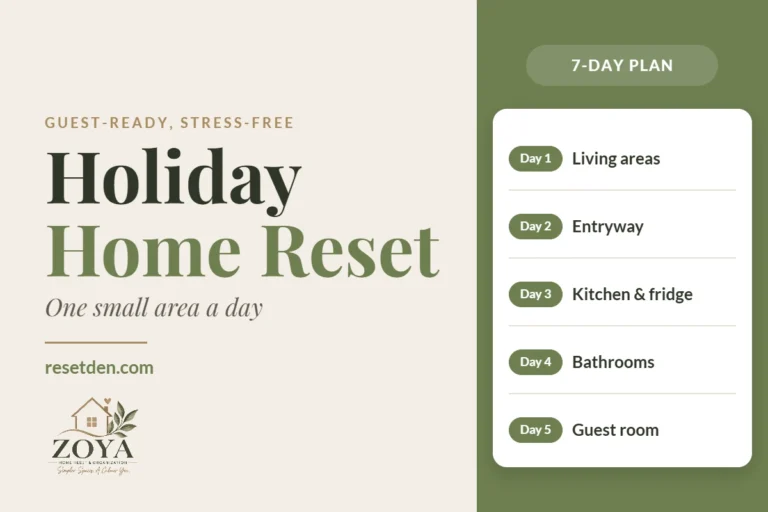
Room-by-room checklists for the days when the house needs more than a quick tidy. Add the home reset checklist and your favorite routines, like the evening reset.
4. Meal Planning and Shopping
A weekly meal plan, a running shopping list and a short list of family favorites for busy nights. Keep a pantry inventory here too, if you use one.
5. Important Contacts
Doctors, school, neighbors, the landlord, the plumber, the electrician and emergency numbers. Keep this page at the front of the section, so anyone can find it fast.
6. Bills and Due Dates
A simple list of regular bills with the due date and how each one is paid. Keep only the list here, not account numbers or passwords. Those belong somewhere private and secure.
7. Home Maintenance
A yearly maintenance list: changing filters, checking smoke alarms, cleaning gutters, servicing the boiler. Add the date each job was last done, so you never have to guess.
8. Manuals and Warranties
Store the most-used manuals and warranty cards in plastic sleeves. For the rest, write down the model number and where the full manual is stored, or note that you keep a digital copy.
9. School and Activities
Term dates, activity schedules, packing lists and permission slips waiting to be signed. Clear it out at the end of each school term.
10. Notes for Guests and Sitters
A one-page guide for babysitters, house-sitters or guests: Wi-Fi name, how the heating works, bedtime routines, where to find the first-aid kit and who to call in an emergency.
How to Set It Up in One Afternoon
- Gather your papers. Collect the loose papers from the fridge, the counter and the kitchen drawer into one pile.
- Sort them by section. Put each paper into one of your chosen sections. Recycle anything out of date.
- Print your pages. Print the schedules and lists you want to use, one section at a time.
- Label the tabs. Use simple, short names so anyone in the family can find things.
- Choose a home for the binder. Keep it somewhere central, like a kitchen shelf or near your family’s drop zone, not hidden in a cupboard.
Keep the first version small. A binder you actually open is better than a perfect one you never use.
Keep It Updated
A binder only works if it stays current. Two small habits are enough:
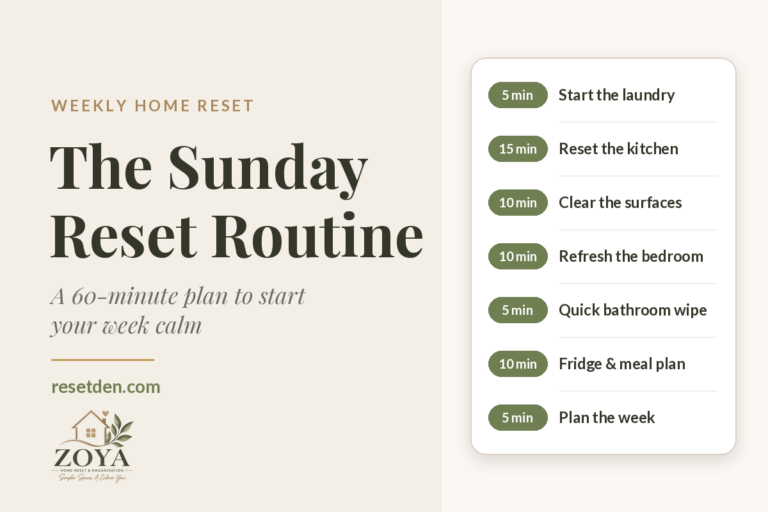
- Weekly: during your Sunday reset routine, update the weekly plan, the meal plan and the shopping list. It takes about ten minutes.
- Monthly: as part of your monthly home reset, remove old papers, add new due dates and print fresh checklists.
If a section never gets used after a couple of months, remove it. Your binder should get lighter and more useful over time, not heavier.
Printable Pages to Get You Started
The easiest way to fill your binder is with pages that are ready to print:
- The free 60-Minute Calm Home Reset Checklist, a one-page reset you can use any day
- The printable cleaning schedule for your Cleaning Routines section
- The ZOYA 7-Day Calm Home Reset Planner, with one page for each room, perfect for the Home Reset section
🌿 Not sure where to start?
Get the free 60-Minute Calm Home Reset Checklist: six simple steps with times, plus a 20-minute version for busy days.
Get the free checklist →Frequently Asked Questions
What should be in a home management binder?
Start with a calendar, cleaning routines, meal planning, important contacts and bill due dates. Add sections for maintenance, manuals, school and notes for sitters when you need them.
Is a home management binder better than an app?
It depends on how you like to work. Many families like a paper binder because everyone can see it, it needs no password or battery, and it stays in one place. Some people use both: the binder for routines and lists, an app for reminders.
How big should a household binder be?
A binder about 4 cm (1.5 inches) wide is enough for most homes. If it gets too full, it is usually time to clear out old papers rather than buy a bigger binder.
Where should I keep my home management binder?
Keep it in a central spot that everyone uses, like a kitchen shelf or near the front door. If it is hidden away, it is easy to forget.
Start With Five Tabs
You do not need all ten sections today. Start with five tabs, print a cleaning schedule and a weekly plan, and use the binder for one week. You will quickly see what to add next.
Looking for more printable pages? Browse all our printables, or get the ZOYA 7-Day Calm Home Reset Planner to fill your binder with ready-to-use room checklists.