How to Declutter Paper: A Simple System for Paper Clutter
Mail on the counter, receipts in your bag, school forms on the fridge and old bills in a drawer. Paper clutter builds up quietly, and before long you cannot find the one document you need. The good news: you do not need a perfect filing system. You need a simple way to deal with paper once, and a habit to keep new paper from piling up.
This guide shows you how to declutter paper in four steps, what to keep and what to shred, and a 5-minute daily habit that stops the pile from coming back.
Why Paper Clutter Is So Hard
Paper clutter is tricky because every sheet asks a small question: “Do I need this?” When you do not have time to answer, the paper goes on a pile. Do that every day and the piles grow on counters, desks and tables. The fix is to make those decisions quick and easy, with clear rules.
Before You Start
Set aside one to two hours for your first big sort. You will need:
- A trash bag and a recycling bag
- A box or bag for papers to shred
- A folder or tray labeled Action
- A folder labeled File
- A timer, so you can work in 25-minute rounds
Gather every loose paper from the house into one place first: the kitchen counter, the entryway, your bag, the car, your desk. Sorting in one place is much faster than room by room.
How to Declutter Paper in 4 Steps
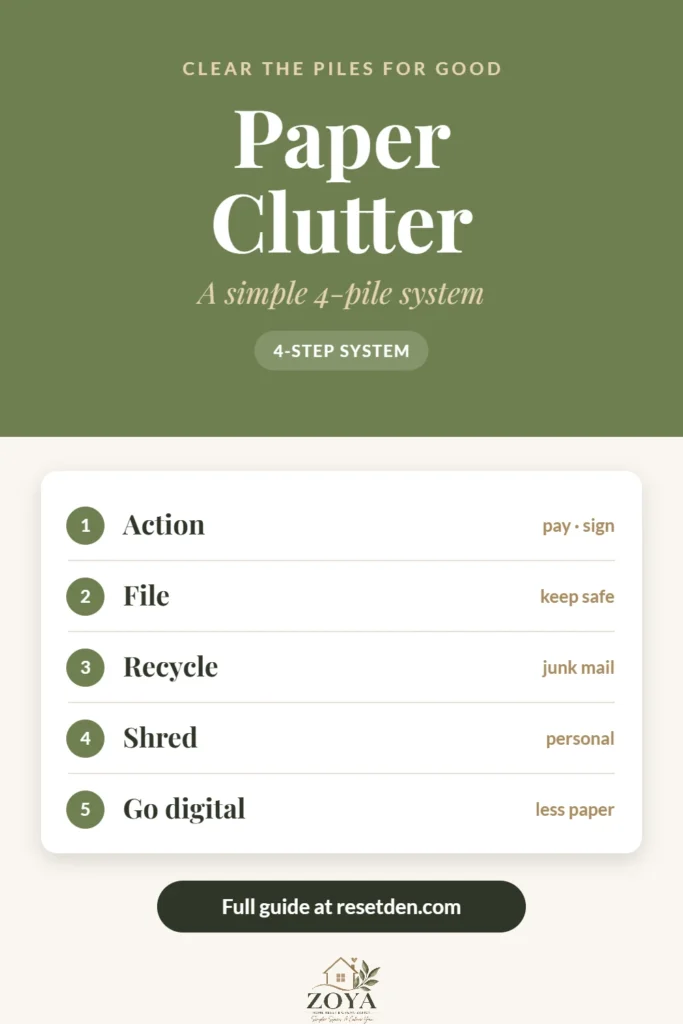
Step 1: Sort Into Four Piles
Pick up each paper once and put it into one of four groups:
- Action: bills to pay, forms to sign, invitations to answer.
- File: important documents to keep (see the list below).
- Recycle: flyers, envelopes, old catalogues, expired coupons.
- Shred: anything with your name, address, account details or signature that you no longer need.
Do not read every page in detail. Glance, decide and move on.
Step 2: Deal With the Action Pile
Put all action papers in one tray or folder and choose one weekly slot to handle them, for example during your Sunday reset routine. Pay, sign, reply, then file or recycle each paper.
Step 3: Set Up a Simple File
You do not need dozens of folders. Most homes manage well with six to eight:
- Home (lease or mortgage, insurance, repairs)
- Car
- Health
- Money and taxes
- Work
- Kids or school
- Warranties and manuals
- Personal documents (in a safe place)
A home management binder is a great home for the papers you use every week, like schedules and contacts.
Step 4: Go Digital Where You Can
Switch to paperless bills and statements, and take a photo or scan of documents you only need for reference. Unsubscribe from catalogues and junk mail you never read. Less paper coming in means less paper to sort.
What to Keep and What to Let Go
Rules vary by country, so check your local tax and record guidance before you shred anything important. As a general guide:
Usually keep long term: birth and marriage certificates, passports and ID, property documents, wills, and important medical records.
Keep for a few years: tax returns and their supporting documents, according to your local rules.
Keep until replaced or no longer needed: insurance policies, warranties for items you still own, and current contracts.
Usually safe to let go: old utility bills once paid (unless needed for tax), receipts for small purchases past their return date, expired warranties, old greeting card envelopes and flyers.
The 5-Minute Daily Paper Habit
The big sort clears the backlog of paper clutter. This habit keeps it clear:
- Open mail next to the recycling bin.
- Recycle junk and envelopes immediately.
- Put action papers in the Action tray.
- File anything important the same day.
It takes less than five minutes and stops paper from landing on the counter. Add it to your evening reset routine so it becomes automatic.
Common Paper Clutter Mistakes
- Buying organizers first. Sort and reduce your paper clutter before you buy folders or boxes. You may need far fewer than you think.
- Keeping everything “just in case”. Most paper clutter is made of things you can find online again, like manuals and statements.
- Creating too many categories. Six to eight folders are easier to keep up than thirty.
- Letting the Action pile grow. Paper clutter comes back fast when bills and forms wait for weeks. Pick one weekly slot and stick to it.
Think of paper clutter as a flow, not a one-time project: paper comes in, gets a quick decision and goes to its home.
🌿 Not sure where to start?
Get the free 60-Minute Calm Home Reset Checklist: six simple steps with times, plus a 20-minute version for busy days.
Get the free checklist →Frequently Asked Questions
Where do I start when the paper clutter feels overwhelming?
Start with today’s mail and one small pile. Sort it into the four groups, then do one 25-minute round each day until the backlog is gone.
How do I declutter children’s school papers and artwork?
Keep a small box for each child. Save a few favourites each term, take photos of the rest, and recycle worksheets once they come home.
Is it safe to throw away papers with my address on them?
Shred anything with your name together with account numbers, signatures or personal details. Plain envelopes with only your address can usually be recycled once you remove the address window.
How often should I sort through my files?
Once a year is enough for most homes. Many people do it when they prepare their taxes.
Clear Your First Pile Today
Grab today’s mail and one pile from the counter, set a timer for 25 minutes and sort. You will be surprised how much lighter the room feels.
For more decluttering help, read things to declutter and try the 30-day declutter challenge. Download the free Calm Home Reset Checklist, or get The Calm Home Handbook for a full paper system and printable pages.