Under Sink Organization: Simple Kitchen & Bathroom Ideas
The cabinet under the sink is one of the hardest spaces in the home to keep tidy. Pipes take up the middle, bottles fall over, and old sponges hide in the back for months. But with a simple plan, under sink organization takes about 20 minutes, and the space stays neat for a long time.
This guide covers both the kitchen and the bathroom. You will learn how to clear the cabinet, work around the pipes, choose the right storage and store cleaning products safely, especially if you have children or pets.
Step 1: Empty and Clean the Cabinet
Take everything out and put it on a towel on the floor. You will probably be surprised by what you find.
While the cabinet is empty:
- Wipe the base and the walls with a damp cloth and a little all-purpose cleaner.
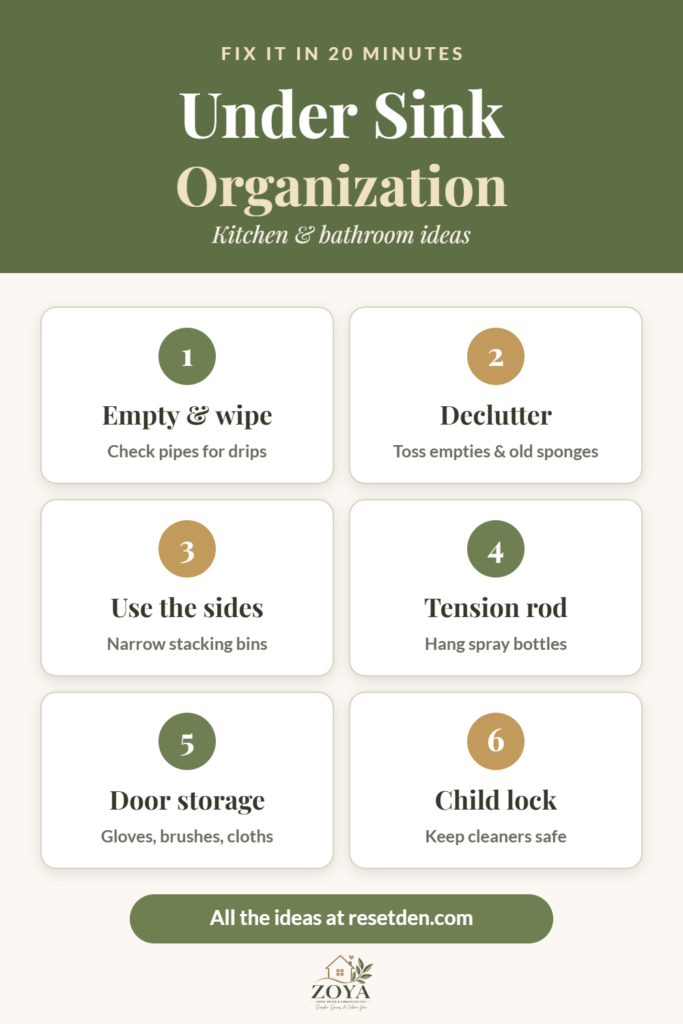
- Check the pipes for drips or water marks. A small leak is easier to fix early, and it can damage the cabinet floor over time.
- Let the cabinet dry completely before you put anything back.
Tip: a washable shelf liner or a cut-to-size tray on the base protects the wood from drips and makes the next clean much faster.
Step 2: Declutter Before You Organize
Now sort what you took out. Be strict, because this is a small space:
- Throw away empty or nearly empty bottles, dried-out sponges, old cloths and anything expired.
- Combine duplicates. If you have three half-used bottles of the same cleaner, keep one.
- Move items that do not belong. Spare toilet rolls, light bulbs or tools might fit better somewhere else.
Keep only what you use regularly in this spot. For more ideas on what to let go of around the house, see our list of 50 things to declutter.
Step 3: Work Around the Pipes
The pipes are the main challenge in under sink organization. Instead of fighting them, plan around them:
- Use the sides. Narrow stackable bins or drawers fit on either side of the pipes and use the full height of the cabinet.
- Choose a U-shaped organizer. Some two-tier shelves are made with a gap in the middle for the pipes, so you get two levels of storage.
- Go up. A small tension rod across the top of the cabinet lets you hang spray bottles by their triggers, which frees the whole floor.
- Use the door. Adhesive hooks or a slim over-the-door rack inside the cabinet door hold gloves, brushes and cloths.
Measure the space before you buy anything, including the depth and the distance between the pipes.
Step 4: Kitchen Under Sink Organization Ideas
Under the kitchen sink, group items by how you use them:
- Everyday dish care: dish soap refill, dishwasher tablets, scrub brushes and sponges, in a small caddy at the front.
- Cleaning sprays: all-purpose cleaner and glass cleaner, hanging on a tension rod or standing in a bin.
- Bin bags: keep the roll in a small box or mounted on the inside of the door, so you can grab one with one hand.
- Backstock: spare sponges and refills go at the back, in a labeled bin.
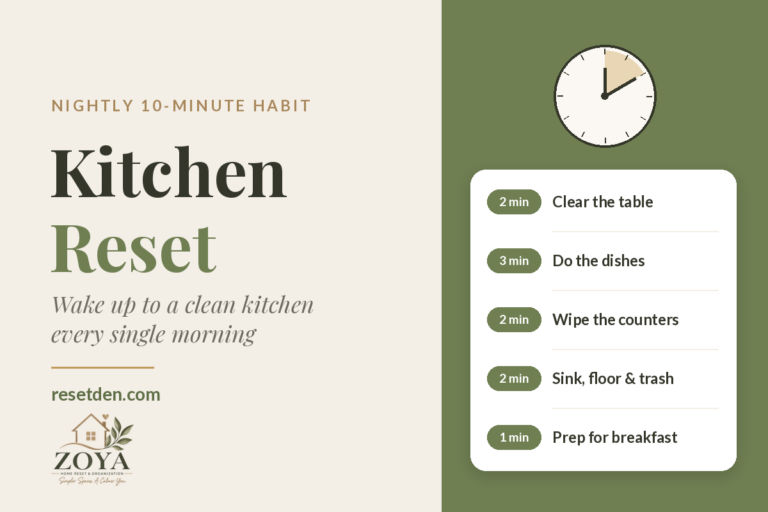
A tidy cabinet under the sink pairs well with a nightly kitchen reset, and with a well-organized pantry.
Step 5: Bathroom Under Sink Organization
The bathroom cabinet usually holds a mix of toiletries and cleaning products. Give each group its own container:
- Daily toiletries: keep the things you reach for every day in a pull-out drawer or a clear bin at the front.
- Hair tools: stand dryers and straighteners upright in a small basket, with cords wrapped loosely. Let hot tools cool fully before you put them away.
- Spare toiletries: extra toothpaste, soap and shampoo go in a labeled bin at the back.
- Bathroom cleaning kit: toilet cleaner, a cloth and gloves in a small caddy you can carry, so cleaning the bathroom takes minutes. Our bathroom cleaning checklist shows the fastest order.
Safety With Cleaning Products, Children and Pets
Many cleaning products are harmful if swallowed or splashed, so storage matters:
- Fit a child safety lock on the cabinet door if young children live in or visit your home.
- Keep products in their original containers with the labels on, so you always know what is inside and what to do in an emergency.
- Store bleach and ammonia-based cleaners apart, and never mix cleaning products.
- Keep the strongest products on a high shelf instead of under the sink if you cannot lock the cabinet.
Keep It Organized
Good under sink organization stays neat with two small habits:
- Put things back in their bin, not just “somewhere in the cabinet”.
- Check it once a month. Throw away empty bottles and wipe the base. It fits nicely into a monthly home reset.
Cleaning under the sink is just one step. For the rest of the kitchen, use our kitchen cleaning checklist.
🌿 Not sure where to start?
Get the free 60-Minute Calm Home Reset Checklist: six simple steps with times, plus a 20-minute version for busy days.
Get the free checklist →Frequently Asked Questions
How do I start under sink organization with pipes in the way?
Use narrow stackable bins on either side of the pipes, a U-shaped two-tier organizer, a tension rod for hanging spray bottles, and the inside of the cabinet door for small items.
What should be stored under the kitchen sink?
Dish soap, dishwasher tablets, sponges, everyday cleaning sprays and bin bags. Move items you rarely use elsewhere to keep the space easy to reach.
Is it safe to store cleaning products under the sink?
It is common, but if children or pets live in or visit your home, fit a child safety lock or store the strongest products on a high shelf. Always keep products in their original labeled containers.
How do I protect the cabinet from leaks?
Use a washable liner or a waterproof tray on the base, and check the pipes for drips every time you clean the cabinet.
Start With a 20-Minute Clear-Out
Set a timer for 20 minutes, empty the cabinet and keep only what you use. You will be surprised how much space appears.
Want a simple plan to reset every room, one day at a time? Get the printable ZOYA 7-Day Calm Home Reset Planner. For more storage ideas, browse all our home organization guides.