How to Declutter Toys (and Keep Them Under Control)
Toys in the living room, toys on the stairs, toys under the sofa and a toy box nobody can close. If your home feels taken over by toys, you are not alone. The good news: when you declutter toys with a simple system, children often play more, tidy up faster and enjoy the toys they keep much more.
This guide shows you how to declutter toys in six steps, how to involve your kids and how to keep the toy clutter from coming back, especially before birthdays and the holidays.

Why Less Toys Can Mean Better Play
Children with too many toys often move quickly from one thing to the next without really playing. With fewer toys in view, they focus longer, use their imagination more and find it easier to put things away. When you declutter toys, you are not taking away fun. You are making space for better play.
How to Declutter Toys in 6 Steps
1. Gather All the Toys in One Place
Collect toys from every room: bedrooms, living room, car and garden. Seeing the full amount helps you and your children understand how much there really is.
2. Remove Broken and Incomplete Toys First
Puzzles with missing pieces, games without parts, broken cars and dried-out markers can go straight away. This is the quickest way to declutter toys without any hard decisions.
3. Sort Into Categories
Group similar toys: building blocks, dolls, cars, art supplies, games, books and soft toys. Now duplicates and overflow become obvious.
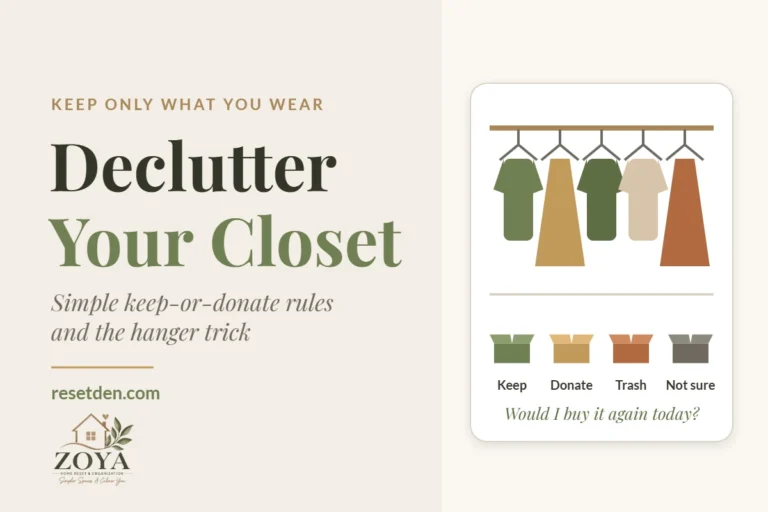
4. Keep the Favourites
Ask your child to choose their favourites in each category. Keep a sensible amount for your space, for example one box of cars or one basket of soft toys.
5. Donate, Sell or Store
Toys in good condition can be donated or sold. Toys your child has outgrown but you want to keep for a younger sibling can be stored in a labelled box.
6. Give Every Toy a Home
Use open baskets, clear bins and low shelves so children can see and reach their toys. Add a picture label to each bin so even young kids know where things go.
How to Declutter Toys With Your Kids
- Explain why. “We are making room for new toys and giving some to children who need them.”
- Let them decide within limits. “Choose your five favourite cars to keep.”
- Keep sessions short. Fifteen to twenty minutes is plenty for young children.
- Praise the effort. Letting go is hard for kids too.
With very young children, it is often easier to declutter toys while they are not at home, then involve them in organizing what stays.
Try a Toy Rotation
Keep only part of the toys out and store the rest in boxes. Every few weeks, swap a box. Old toys feel new again, and there is less to tidy each day.
Keep Toy Clutter Under Control
- One in, one out: when a new toy arrives, an old one leaves.
- Declutter toys before birthdays and the holidays to make room for gifts.
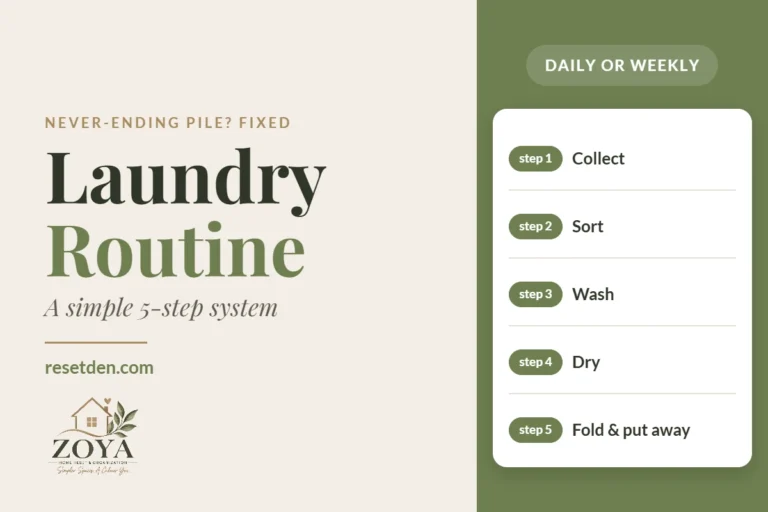
- Do a 5-minute toy pickup every evening as part of your evening reset routine.
- Use a printable chore chart so tidying toys becomes your child’s daily job.
🌿 Not sure where to start?
Get the free 60-Minute Calm Home Reset Checklist: six simple steps with times, plus a 20-minute version for busy days.
Get the free checklist →Frequently Asked Questions
How many toys should a child have?
There is no perfect number. A good rule is to keep what fits in the storage you have and what your child plays with regularly.
Should I declutter toys without my child knowing?
For toddlers it is often easier. Older children should be involved, so they learn to make decisions and feel respected.
When is the best time to declutter toys?
Before birthdays and the holidays, and at the start of each season when interests change.
What should I do with toys my child has outgrown?
Donate them, sell them or pass them on to friends and family. Keep a small memory box for a few special favourites.
Start With One Toy Box Today
Choose one box or basket, remove anything broken and let your child pick the favourites. That is the first step to declutter toys for good.
For more help, see how to start decluttering and our declutter checklist. Download the free Calm Home Reset Checklist, or get The Calm Home Handbook with family routines and 15 printables.