The Ultimate Declutter Checklist: Room by Room
Cleaning moves things around. Decluttering removes them for good. If your home still feels crowded after every cleaning day, the problem is usually not dirt but too much stuff. A declutter checklist shows you exactly what to let go of, room by room, so you are not left staring at a full cupboard wondering where to begin.
This declutter checklist covers seven areas of the home. For each one, you get a short list of the items people most often keep for no reason. Work through one area at a time, and your home will feel lighter after every session.
Before You Start: Set Up Four Boxes
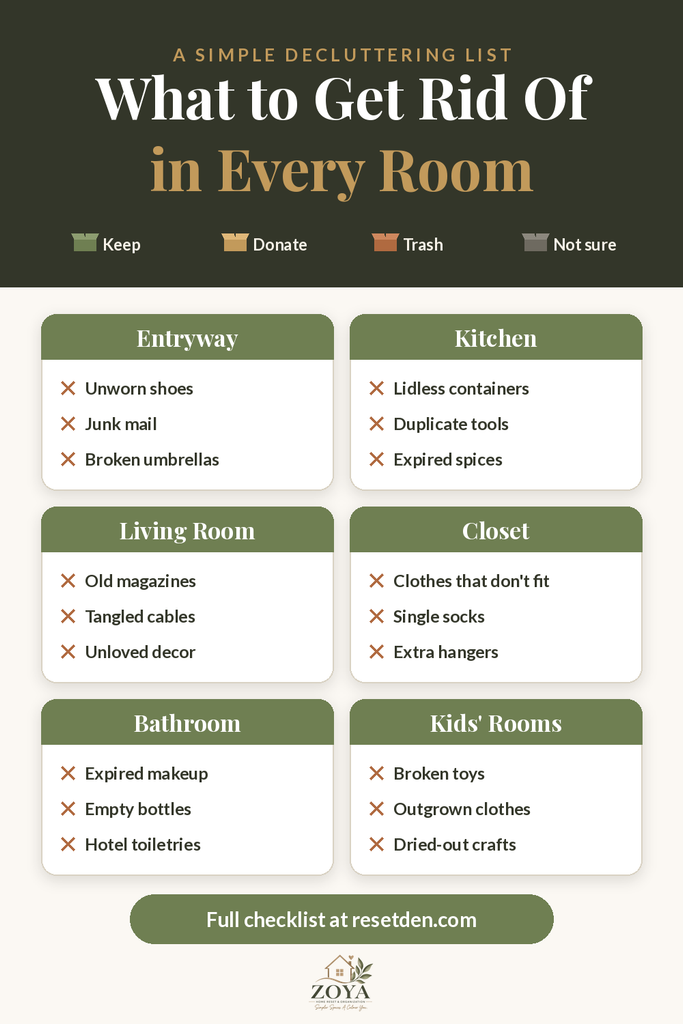
Decluttering is mostly decisions, and decisions are tiring. Four boxes make every decision quick:
- Keep: items you use and love, which go back in their place.
- Donate or sell: items in good condition that you no longer use.
- Trash or recycle: items that are broken, expired or worn out.
- Not sure: items you cannot decide on today.
Close the “not sure” box, write the date on it and store it out of sight. If you have not opened it in three months, donate it without looking inside. Our Messy House Overwhelm guide explains this method in more detail.
One more rule: work on one area at a time and finish it before you move on. A finished drawer feels better than five half-sorted rooms.
Entryway Declutter Checklist
- Shoes nobody has worn this season
- Coats, hats and scarves that no longer fit
- Old keys you cannot identify
- Expired coupons, flyers and junk mail
- Broken umbrellas
- Reusable bags beyond the five you actually use
Kitchen Declutter Checklist
The kitchen is usually the room with the most hidden clutter, so give it extra time on your declutter checklist.
- Expired food, spices and sauces
- Mugs and glasses beyond what your household uses in a week
- Plastic containers without matching lids
- Duplicate tools: three spatulas, two can openers
- Gadgets you have not used in a year
- Old takeaway menus, chopsticks and sauce packets
- Chipped plates and stained dish towels
Living Room Declutter Checklist
- Magazines and catalogs you will not read again
- DVDs, CDs and games nobody plays
- Decor items you no longer like
- Tangled cables and chargers for devices you do not own
- Worn-out cushions and throws
- Books you will not reread (keep your favorites)
Bedroom and Closet Declutter Checklist
- Clothes that do not fit or that you have not worn in a year
- Items with stains or holes you will never fix
- Socks without a pair and stretched-out underwear
- Old handbags and belts
- Extra hangers (donate them with the clothes)
- Everything piled on the nightstand that does not belong there
Tip: turn all your hangers backward. When you wear something, hang it the right way. After six months, anything still backward is a strong candidate to donate.
Bathroom Declutter Checklist
- Expired medicines (return them to a pharmacy if your area offers it)
- Makeup older than its recommended use date
- Almost-empty bottles of shampoo and lotion
- Hotel toiletries you never use
- Old toothbrushes and worn hair ties
- Towels with holes or rough edges
Kids’ Rooms Declutter Checklist
- Toys with missing pieces
- Clothes and shoes that are too small
- Duplicate toys and party favors
- Craft supplies that are dried out
- Books for a younger age group
- Artwork: keep a few favorites, photograph the rest
Involve children when they are old enough. Ask them to choose toys to pass on to another child. It teaches them that letting go can be generous.
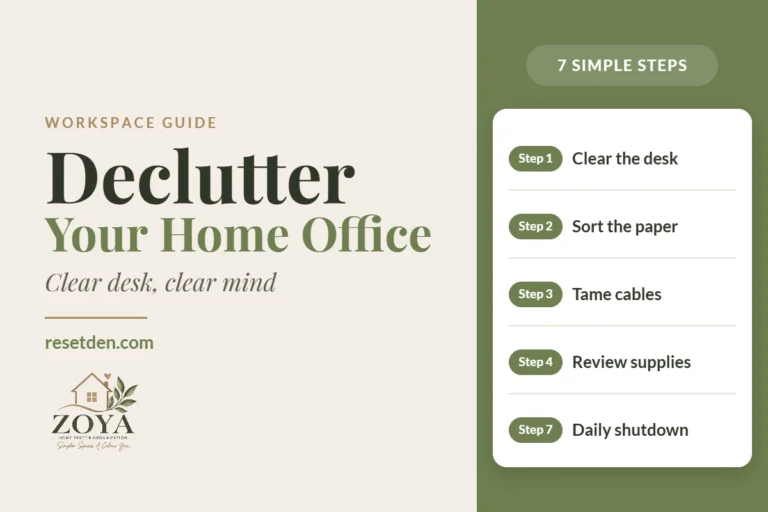
Paper and Home Office Declutter Checklist
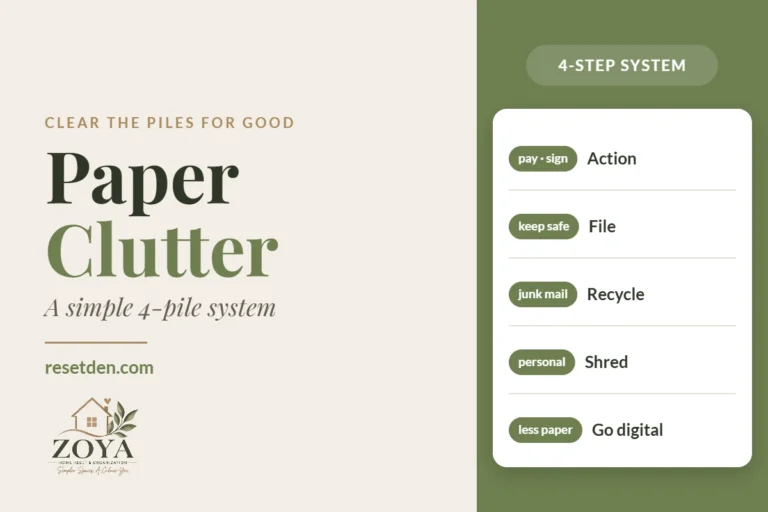
- Old bills and statements you no longer need to keep (check local rules for tax papers)
- Manuals for appliances you no longer own
- Dried-out pens and old notebooks
- Expired warranties and receipts
- Greeting cards: keep a few meaningful ones
- Old cables, cases and devices in the drawer
How to Keep Clutter From Coming Back
Decluttering once feels great. Keeping it that way takes three small habits:
- One in, one out. When something new comes in, something old goes out.
- A permanent donation box. Keep it in a closet and drop items in as you find them.
- A monthly check. Our Monthly Home Reset includes one drawer and a donation drop-off every month.
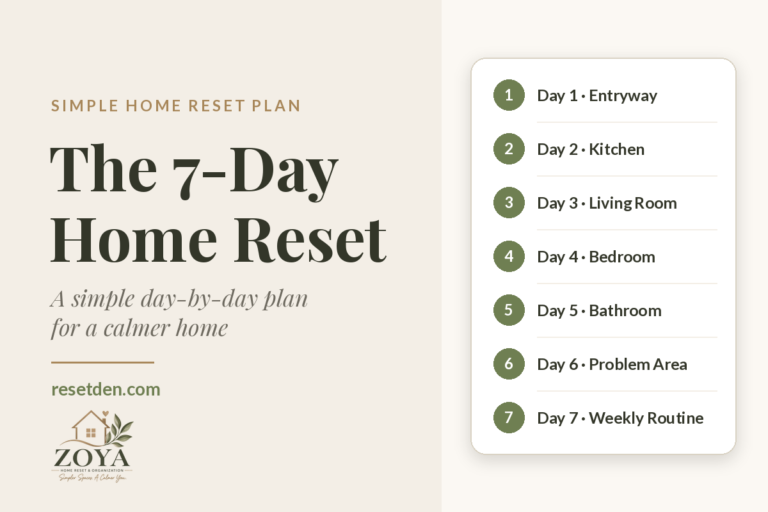
Once the extra items are gone, tidying becomes much faster. The Home Reset Checklist and The 7-Day Home Reset will help you reset each room afterward.
Want a slower pace? Try the 30-day declutter challenge (one 15-minute task a day), or start with these 50 things to declutter right now.
🌿 Not sure where to start?
Get the free 60-Minute Calm Home Reset Checklist: six simple steps with times, plus a 20-minute version for busy days.
Get the free checklist →Frequently Asked Questions
Where should I start decluttering?
Start with the area that bothers you most or the one you see every day, such as the entryway or the kitchen counter. Quick visible results give you the motivation to continue with the rest of the declutter checklist.
How long does it take to declutter a whole house?
It depends on the size of the home, but most people need two to four weeks if they work 30 minutes a day. Doing one area per session is faster in the long run than trying to do everything in one weekend.
What should I do with items I feel guilty about letting go?
Remember that keeping an unused item does not honor the person who gave it to you. Take a photo of it, keep one small piece if it is sentimental, and let it go to someone who will use it.
Print Your Declutter Checklist
A declutter checklist works best on paper, where you can tick items off as you go. The ZOYA 7-Day Calm Home Reset Planner includes printable room-by-room pages to guide each session.
Pick one area from this list today, set up your four boxes and start. Looking for more ideas? Browse all our decluttering guides.